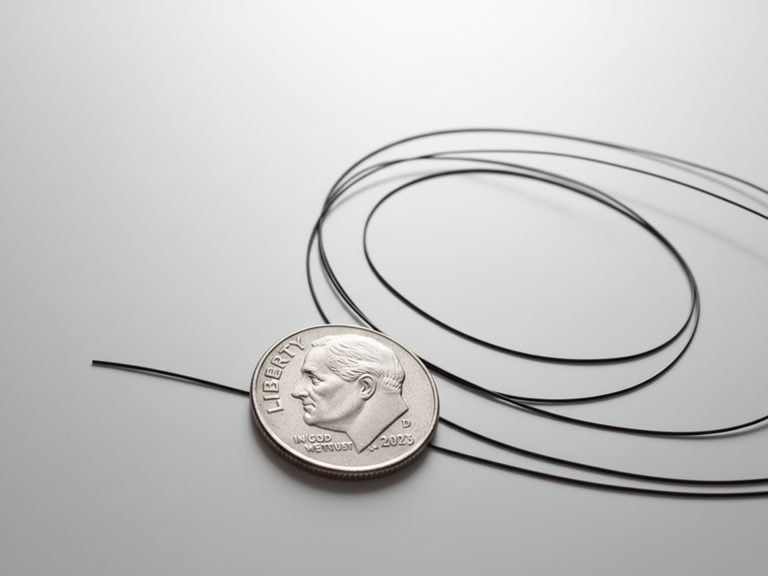
Miniature, micro-miniature, and ultra micro-miniature coaxial cable from New England Wire meets the demanding requirements of the medical and industrial world with custom options for the center conductor, dielectric, shield, and jacket.
Examples include high strength alloy conductors for superior flex life and foamed dielectrics for reduced size and attenuation. By utilizing high quality low dielectric constant materials, we are able to reduce size without sacrificing signal integrity. In addition, we can combine multiple coaxes with other components into larger composite cable.
Conductor Gauge Ranges & Materials
- Our full range of conductor materials are available including bare copper, plated copper, and high strength alloy
- Typically stranded for improved flexibility
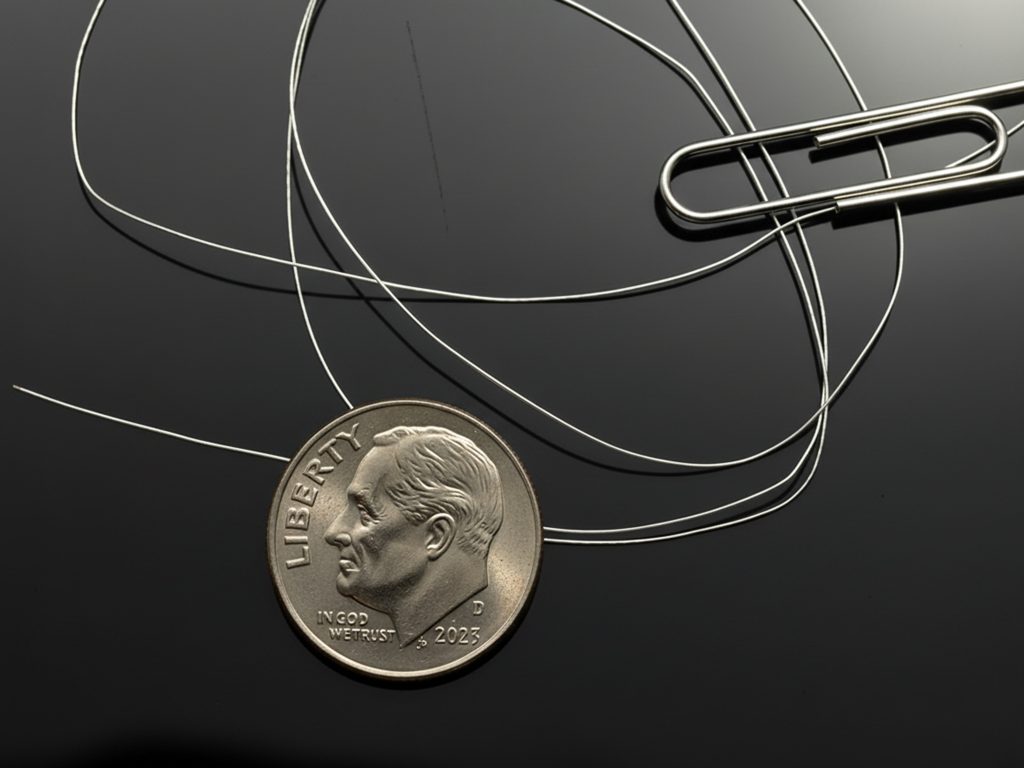
- Miniature (24-32 AWG), Micro-Miniature (34-44 AWG), and Ultra Micro-Miniature (46-50 AWG) sizes are available
Dielectric, Shielding & Jacket Selection
- Dielectric Materials: Selected based on electrical, temperature, and size requirements. Options include Polypropylene, FEP, PFA, ETFE, and NEWcel®.
- Shield Configurations: Typically designed for 90% Minimum Coverage. Options include braid, spiral, aluminum foil, or a combination thereof.
- Jacket Materials: Material selected based on specific environmental and application requirements.
Custom Design Considerations & Target Applications
Custom Design Considerations
- Ultra flexible
- Long flex life
- High temperature
- Fluid and chemical resistant
- Low noise
- UL AWM rating
- Halogen free
- Biocompatible
TargetApplications
- Digital imaging
- Electrosurgical
- Antenna leads
- Ultrasound
- Audio/Video
- Patient monitoring
Engineers Ask: Miniature and Micro-Miniature Coaxial Cable FAQs
How does smaller diameter affect attenuation?
In general, all electricals become harder to control as diameter gets smaller. Specifically, attenuation will rise for several reasons. The smaller the conductor the higher the resistance. High frequency pushes signal to the outer edge of the conductor, which if smaller provides less surface area. In addition, a smaller conductor diameter concentrates electromagnetic fields at the intersection of the conductor and dielectric layer. All these factors contribute to increased signal attenuation.
Does impedance become harder to control?
Yes, as coaxes get smaller, even the slightest variation in conductor diameter or insulation thickness will impact target impedance.
What happens to power handling?
As expected, smaller coaxial cables can’t handle much power without overheating.
When does miniaturization start to hurt flex life or durability?
There are always trade-offs with miniaturization. Smaller diameters can sometimes offer better flexibility, but long-term flex life will often be compromised due to the fragile nature of the miniature or micro-miniature coax.